What are dynamic video ads and how do they work?



Summarize with





Dynamic video ads solve one of digital advertising’s biggest problems - showing the same ad to people who absolutely aren’t the same.
Your audience has different interests, demographics, browsing histories, locations, and previous interactions with your brand. Yet, with a static video ad, everyone sees the exact same creative.
Add in dynamic video advertising, and that’s no longer a thing. Instead of creating one video for everyone, you use data-driven personalization to dynamically personalize elements of that video, such as product images, text, offers, visuals, and calls to action, making each ad far more relevant to the person seeing it.
And believe it or not, that relevance can make a measurable difference. In fact, Innovid found that DCO-powered dynamic video delivered an 8% higher click-through rate on mobile than standard video, while also earning more than 37 additional seconds of engagement. That’s almost as high as the average attention span, which, according to the latest research, is just 47 seconds!
So, it’s clear: DVAs are the way to go in 2026 and beyond. The only question is, how do you create such ads without manually editing each version and losing time (and your mind) in the process? We know the answer: Plainly Videos.
But before we show you exactly how you can create and automate your own DVAs with Plainly, let’s explain in detail what dynamic video ads are, how they work, where you can run them, and what you stand to gain from adding them to your personalized video marketing strategy.
Let me tell you - it's a lot.
What are dynamic video ads?
Dynamic video ads (DVAs) are automated video ads that change parts of their creative based on data. Unlike a static video ad, where every viewer sees the same video file, DVAs can adapt elements such as text, product images, prices, offers, visuals, voiceovers, and CTAs to make the ad more relevant to whoever is seeing it.
Put simply, the formula looks something like this:
Dynamic video ad = video template + data + automation
What this means is you start with one master video template and define which elements can change. Then, you connect it to a data source, for example, a product feed, CRM, spreadsheet, or API. Based on that data, automation tools generate different video variations, either in bulk or on demand, while dynamic creative optimization (DCO) helps determine which ad variation has the most relevant content for each audience.
To paint a picture of the results dynamic ads can bring, let’s take our client Tapni - a company that creates NFC-enabled digital business cards - as an example. Tapni wanted to remarket to customers who designed their cards but abandoned the purchase. So, using an After Effects template and Plainly’s API, they automatically turned each abandoned customer’s card design data into a personalized video and sent it back to them via email. As a result, they saw a 10% increase in conversions among customers who had abandoned their carts. Impressive, isn’t it? 🙂
Benefits of dynamic video ads
These ads are engaging in a way never before seen, to the point where they don’t even feel like ads anymore.
But beyond the personalized user experience, here are the tangible benefits we’ve seen firsthand working with brands that use dynamic video successfully:
- Increased engagement and conversions - Personalized video content increases its relevance, which means there's a higher likelihood that people will watch, click, and act. Studies have also shown that dynamic ads can deliver up to 94% higher CTR compared to traditional static ads, and by extension, higher conversion rates.
- Faster creative production at scale - Instead of producing dozens of unique clips manually, you create one base template and then generate hundreds (or even thousands) of variations automatically.
- Real-time personalization - They help convey the right message to the right user at the right time without any manual editing involved.
- Less ad fatigue - People tune out static, repetitive content. Dynamic video keeps things fresh, personalized, and scroll-stopping. That’s because instead of seeing the same ad over and over, viewers get something new each time that actually feels made for them. This results in a longer campaign life and enhanced results.
- Improved ROAS and ROI - With better targeting, stronger performance metrics, and scalable workflows, dynamic video ads offer a higher return on ad spend (ROAS) and return on investment (ROI).
- Cross-platform compatibility - These innovative adverts can be adapted to suit platforms all around, from YouTube and TikTok to even connected TV (CTV).
How different industries use DVAs
Dynamic video ads aren’t limited to one niche or channel; they’re flexible by design. We’ve seen brands in e-commerce, travel, real estate, finance, and beyond use them to target users with engaging content that feels tailor-made.
Here’s how different industries are leveraging dynamic video to drive optimal results:
E-commerce
- Personalized product recommendations - Show users the exact products they’ve browsed, added to cart, or similar items based on their behavior.
- Abandoned cart recovery - Remind users of products they left behind, complete with price, discount, and shipping info.
- Localized offers - Highlight regional discounts, promotions, or store locations based on geolocation.
Automotive
- Vehicle highlights based on user interest - Showcase different car models depending on browsing history or preferences, like body style or fuel type.
- Dynamic test drive invites - Automatically invite users to test drives near them, using personalized scheduling and location details.
Sports
- Event recaps and participation videos - Create custom race recap videos or personalized sports highlight reels with the participant’s name, time, and footage.
See how Plainly helped Augment Agency generate 5,000+ race recap videos tailored to each individual for the Run Malibu event.
Travel
- Destination-specific ads - Serve travel ideas and offers based on recent searches (e.g., “beach vacation” triggers tropical getaways).
- Dynamic pricing and availability - Show live prices for flights and hotels personalized by the user’s search criteria.
Retail
- Seasonal promotions - Dynamically switch creative assets to reflect seasons, holidays, or major sales events.
- Loyalty-focused content - Reward returning customers with exclusive offers, personalized thank-yous, or early access invites.
Hospitality
- Location-based hotel offers - Present personalized booking options based on past visits or user proximity.
- Upsell and cross-sell opportunities - Suggest room upgrades or amenities based on booking behavior.
Financial services
- Personalized financial product videos - Recommend credit cards, loans, or insurance based on user profile and browsing history.
One of the hottest hyper-personalization examples in this context is Barclays' ad campaign, which literally paints a picture (ok, a video) of what’s possible with a loan. Instead of a generic message, the viewer is shown a completely personalized and immersive experience that includes everything from a custom license plate and a car to a house bearing their name. Even the voiceover is personalized!
How to create dynamic video ads with Plainly
And that brings us to the practical side of this blog, which is creating your own DVAs with none other than Adobe After Effects and Plainly.
And if you’re more of a visual type, here’s a full tutorial to follow along.
Define your campaign goals
Start by getting clear on your objective: Are you aiming for abandoned cart recovery, localized promotions, or something else entirely? Once you know your goal, decide on whom you’re going to target. Then, identify which data points you’ll use to personalize your videos (e.g., customer names, locations, recently viewed products, time-sensitive offers, etc.), as these will be the dynamic elements in your video.
Create video templates
Next, you’ll want to create a reusable master template in After Effects. Why AE? Because it gives you the most flexibility and control for templatization, and it works seamlessly with Plainly.
Design your layout as usual, but mark any parts that should change - for example, text, images, and colors. Use a consistent naming prefix like ‘’edit’’ (e.g., editTitle, editImage, etc.) so Plainly can recognize them as dynamic elements and execute After Effects automation properly.
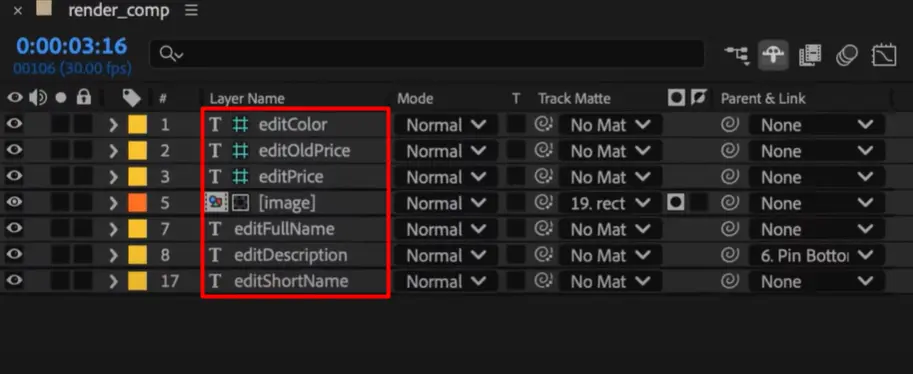
When you’re done, zip the project with all assets included.
Upload your template
Now it’s time to head over to Plainly and upload your zipped project file. Or use our official Adobe plugin to send it directly to the platform in one click.
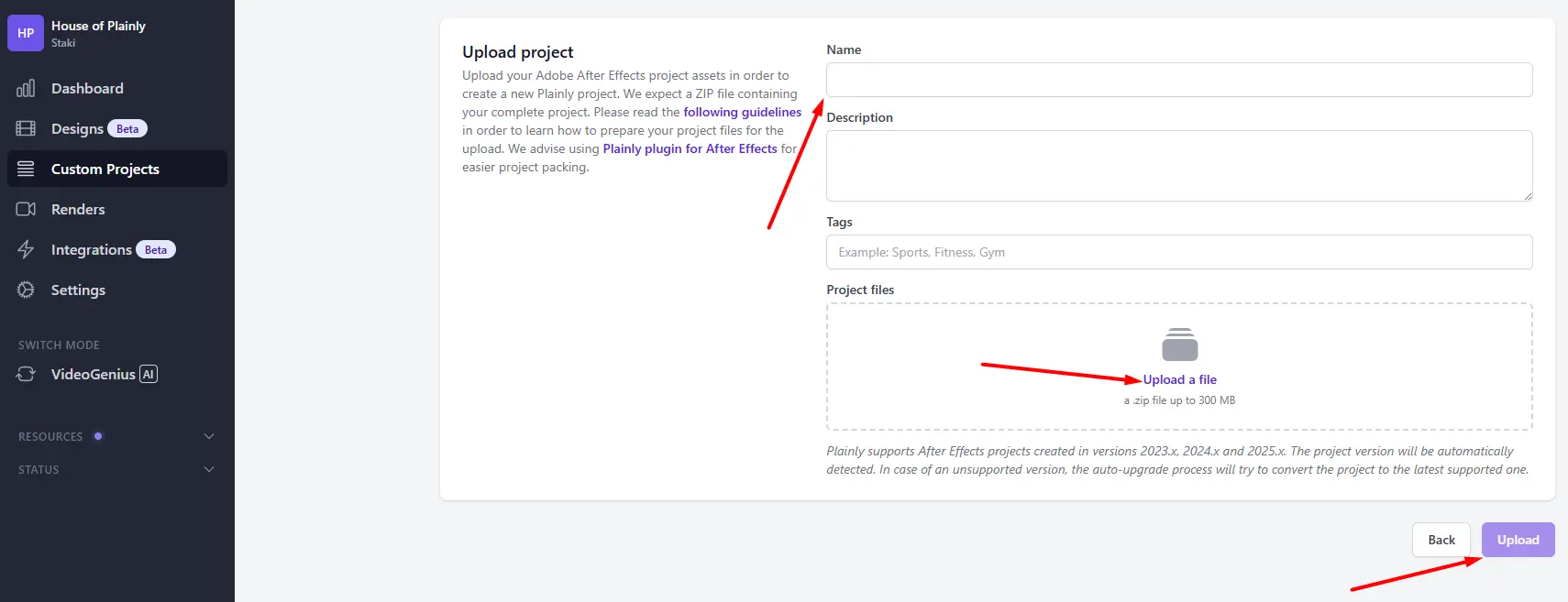
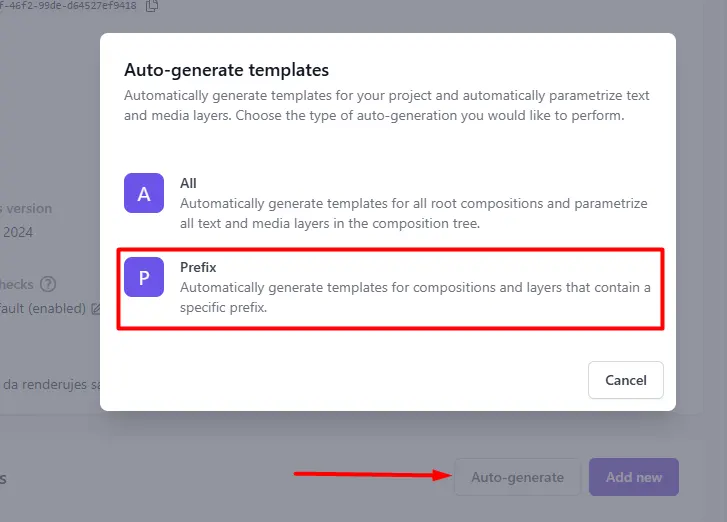
After the upload, click Auto-generate, then Prefix, and enter the prefix you used in AE (edit, for example). Plainly will scan your composition and automatically map the dynamic layers.
Connect your data source and render video versions
To actually personalize each video, you’ll need to connect the template to a data source.
The data source we and our clients most commonly use is a CSV file, which you can create using any spreadsheet tool, whether that’s Google Sheets, Excel, or something else entirely. In that case:
- Each row = a new video
- Each column = a dynamic layer
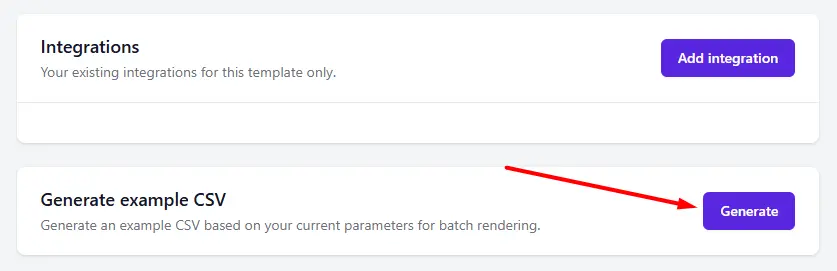
Not sure where to start? Just open your template in Plainly and click Generate CSV. It will create a ready-to-fill file with the correct column headers, which you can populate with your data and upload back to the platform.
Other than uploading a CSV, you can also pull in data through Plainly’s native integrations with Airtable, Google Sheets, and Excel, or using the API.
Batch render your videos
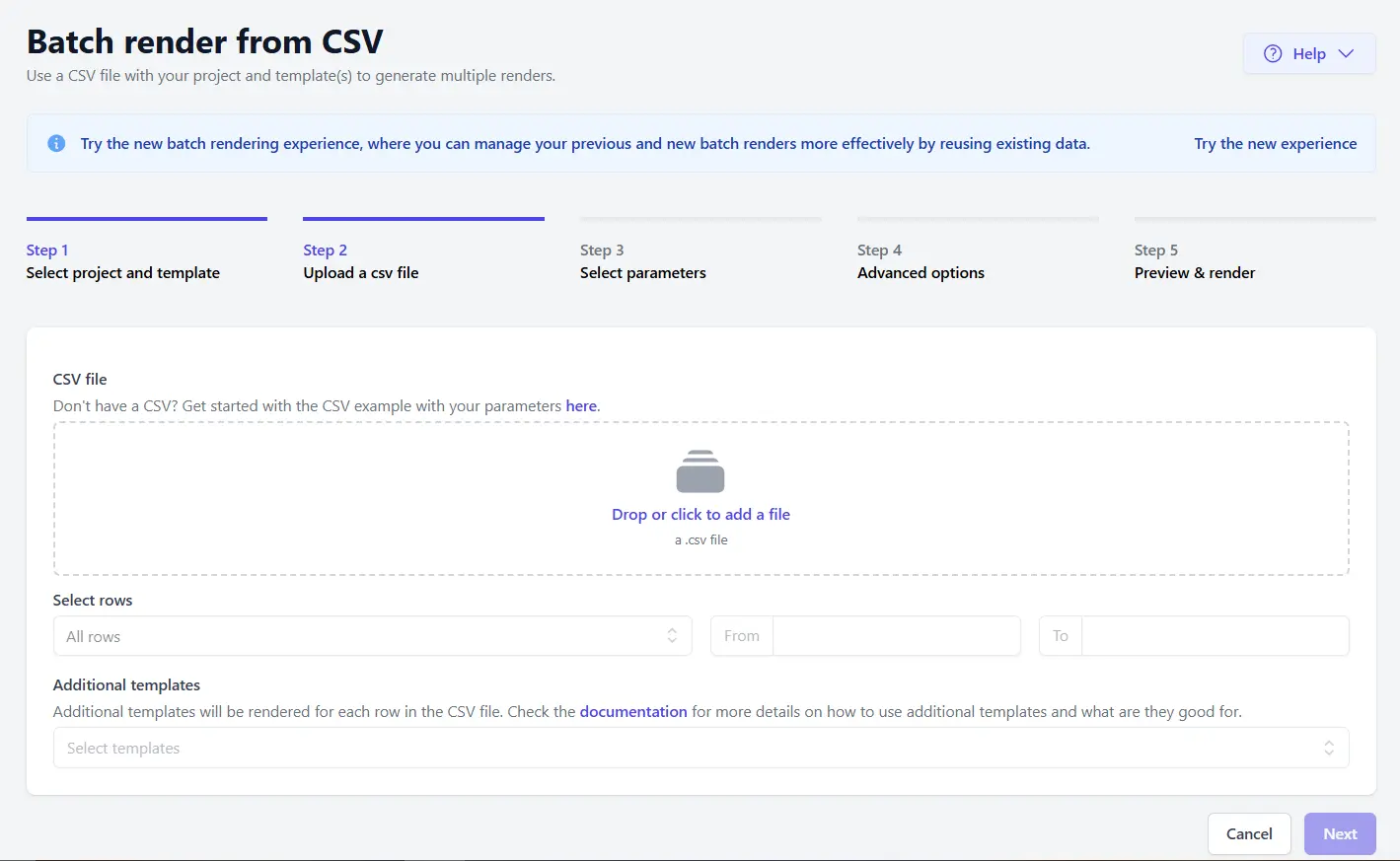
Once your data source is connected, it’s time to render the videos. If you’re using a CSV, head to Batch Render, upload your file, and use Auto-link to match each column with the corresponding dynamic layer in your AE template. Double-check that everything is mapped properly, define advanced options, and finally, hit Render to have this bulk video editor automatically generate a separate video variation for each row in your file. With integrations or the API, each render is triggered automatically as new data comes in.
Distribute your videos
Now that your videos are ready, it’s time to get them in front of your target audience.
To do so, you can:
- Download each video individually (best for smaller batches)
- Download the entire batch as a ZIP file
- Automatically upload them to Google Drive, Dropbox, Frame.io, Vimeo, or YouTube (with more integrations coming soon!)
- Use Plainly’s API to fully automate delivery workflows
If you're running paid ads, you can also upload your videos directly to dynamic video ad campaigns across social media and advertising platforms, such as Meta, TikTok, YouTube and Google Ads, LinkedIn, and more. The exact video formats and placements you’ll use depend on the advertising platform, but we’ll get into those in more detail later.
Create a creative workflow automation
At this point, you’ve automated the video production itself. But chances are, there are still a bunch of repetitive steps happening before and after that. A bunch of steps you can automate using a creative automation platform we built: Plainly Flows.
Plainly Flows lets you turn the whole process into one reusable workflow, from collecting campaign inputs through a form and using AI nodes to generate parts of the video creative, all the way to review and approval steps. Once it’s set up, anyone on your team can run the same workflow without having to figure out the process from scratch every single time.
Where can you run dynamic ads
The short answer is, pretty much anywhere that accepts video creative.
Some advertising platforms can dynamically select products or creative themselves, while on others you can upload the video variations you’ve already created and use them as part of your advertising campaigns across social media.
- Facebook and Instagram (Meta) - Run dynamic video ads across Meta placements, while catalog-based campaigns can also use product data to personalize which products and ad content each person sees.
- Google and YouTube - Run different video formats through Google Ads across YouTube, Google video partners, and Google TV, depending on your campaign goal and placement.
- TikTok - Use your videos for short-form social ads or pair video creative with product catalog data to create more relevant, product-focused advertising experiences.
- LinkedIn - Upload personalized video variations as video ads to reach different B2B audience segments across the LinkedIn Feed and LinkedIn Audience Network.
- X (a.k.a. Twitter) - Use your video variations as standard or vertical video ads, adapting the format depending on where the ad will appear.
- TV & CTV - Dynamic video also works for TV and connected TV advertising, where different versions can be served based on factors such as audience, market, or location.
- Digital signage - You can also use dynamic videos for digital signage, changing ad content based on location, time, live data, or the screen where it appears.
Best practices for dynamic video ads
Creating dynamic video ads is one thing. Creating ones that actually perform? That takes a little more thought.
That said, from our experience, these are the best practices worth following:
- Keep your videos concise and make the first 2-3 seconds count to retain the attention of the viewer.
- Decide on one main action you want the viewer to take and build the creative around it.
- Build templates with variation in mind to make sure the layout won’t break once you start generating 100s or 1000s of versions.
- Keep your visuals and typography clean.
- Optimize video formats for each platform, as different platforms have different requirements for dimensions, length, pacing, and safe zones.
- Use A/B testing to improve your video by comparing different hooks, visuals, offers, CTAs, and other elements, then use performance data to guide future optimization.
- Track metrics such as CTR, conversion rate, ROAS, and ad spend to identify which dynamic ad variations are actually more likely to convert and which ones need adjusting.
- If your dynamic video ads are based on user data, make sure your collection and personalization practices comply with relevant privacy laws and clearly explain how customer information is handled in your privacy policy.
Ready to jump on the dynamic video advertising wagon?
By now, it should be clear: dynamic video ads are more effective, more scalable, and way more impactful than their static counterparts.
They enable you to connect with your audience on a personal level, keep your creativity fresh, and drive better performance across every platform.
And with the tools available today (Plainly and Plainly Flows, of course), it’s never been easier to create and launch fully personalized video campaigns at scale without the usual production bottlenecks.
So, if you’re ready to:
- Stop blending in with generic ads,
- Start reaching the right audience with the right message,
- And finally, make video work as hard as the rest of your funnel…
We’d love to show you how! Book a demo with Plainly, and let’s make your next campaign your most effective yet.